




Volkswagen Cancels Wolfsburg Manufacturing Project Including Gigacasting
Volkswagen Group has canceled an advanced manufacturing project at its Wolfsburg headquarters plant that was intended to introduce gigacasting, according to a report by Gasgoo. The decision comes as declining profits force the group to reassess investment plans across its German plants.
The project would have brought a production method that uses very large presses to form large sections of a vehicle body in a single piece. Its intended appeal is to reduce the number of individual components and production steps. Canceling the project means that this planned change to manufacturing at Wolfsburg will not proceed as proposed.
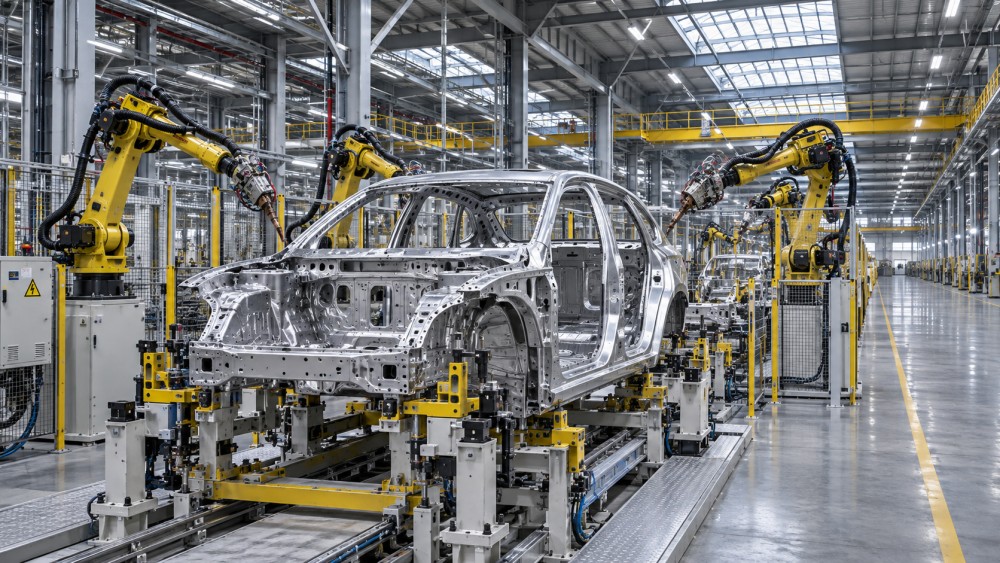
What the cancellation means for the plant
The immediate decision concerns an investment project at a specific factory. It does not, by itself, establish that Volkswagen has rejected gigacasting for every plant or future vehicle program. The distinction matters because a manufacturing technology and the business case for introducing it at a particular site are separate questions.
Gigacasting can reduce the number of parts that need to be brought together during body production. Realizing that benefit, however, depends on committing resources to the equipment and the surrounding production process. When profits decline and investment plans come under review, the expected operational gains must be weighed against the cost and timing of the proposed project.
For Wolfsburg, the practical change is that the planned introduction of this manufacturing approach has been canceled. The available account does not describe a replacement project or establish how the plant's production arrangements will change as a result.
Investment and workforce considerations
The decision illustrates the tension between a potential simplification of production and the financial commitment needed to achieve it. Fewer components and production steps may make a process attractive in principle, but those advantages do not remove the need to fund and organize a substantial manufacturing change.
The reassessment also has a labor dimension. A shift toward forming larger body sections as single pieces could change the balance of work across production steps. How any such change would affect employees depends on the design and implementation of a specific project. The reported cancellation should therefore be read as a decision about the proposed investment, rather than as evidence of a particular workforce outcome.
Suppliers and equipment providers connected to a project of this kind would also have reason to follow the decision. If a planned production method is canceled, demand associated with introducing that method at the site may be affected. The report does not identify contracts, suppliers or orders, so the effect on individual businesses cannot be established from the announcement alone.
What remains open
The broader question is how Volkswagen will prioritize manufacturing investment as it reviews plans for its German plants. The Wolfsburg cancellation shows that the proposed project did not continue through that reassessment; it does not show which other investments will be retained, changed or canceled.
Further company announcements or reporting on plant investment plans may clarify whether an alternative approach is developed for Wolfsburg and how gigacasting fits into the group's future manufacturing decisions. Until then, the clearest conclusion is the cancellation of the stated project and its planned use of the technology at the plant.
Related News
- 00
0000-00
Volkswagen Cancels Wolfsburg Manufacturing Project Including Gigacasting - 00
0000-00
How to choose plastic construction materials for outdoor use - 00
0000-00
India Proposes Anti-Dumping Duties on Medical Gloves from Malaysia and Thailand - 00
0000-00
What causes injection molding nozzles to leak at the mold? - 00
0000-00
US Reshoring and Foreign Investment Announced 247,000 Manufacturing Jobs in 2025
Tag