


Excessive energy consumption in tire machinery usually comes from avoidable thermal losses, inefficient utility systems, unsuitable process settings, deteriorating components, and equipment operating without productive output.
For plant managers and process engineers, the central question is which losses can be removed economically while preserving compound consistency, curing performance, and finished tire quality.
High consumption alone does not prove inefficiency. Larger tires, different compounds, increased production, and colder incoming materials can legitimately increase a machine’s total energy demand.
The more useful warning is rising energy per comparable good tire, especially when accompanied by longer cycles, unstable temperatures, increased rejects, or extended idle operation.
Finding the cause requires separating electricity used by machinery from steam, compressed air, cooling, and other utilities supplied through shared plant infrastructure and distribution networks.
This distinction prevents expensive mistakes. Replacing a motor may deliver limited value when the dominant loss comes from leaking steam valves or unnecessarily prolonged curing cycles.
Where Is Energy Actually Being Lost?
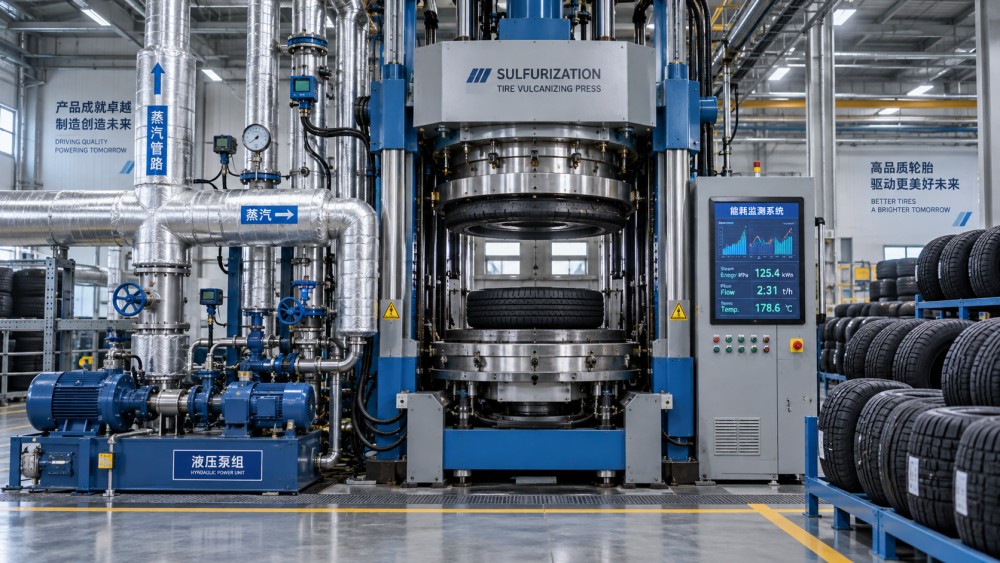
Tire manufacturing combines several energy intensive operations: compound mixing, extrusion, component preparation, tire building, and curing. Their energy profiles differ enough to require separate diagnostic approaches.
Mixers and extruders often draw substantial electrical power during processing. Curing presses may depend heavily on thermal energy, although heating arrangements vary across equipment designs.
Hydraulic power units, vacuum systems, cooling pumps, and compressed air equipment add further demand. Some continue operating even when their associated production machines are stopped.
Begin by mapping each major machine to its energy sources and operating states. Include production, warmup, changeover, planned waiting, breakdown, and overnight standby where applicable.
Then compare consumption against useful output. Electricity per kilogram of acceptable compound and thermal energy per good tire usually reveal more than monthly utility totals.
Keep product families separate when establishing baselines. Comparing a passenger tire line directly with a heavy truck tire line can produce misleading conclusions about efficiency.
Also define measurement boundaries. A press electricity meter cannot capture its steam consumption, while a boiler meter includes losses serving multiple machines and production areas.
Are Heating and Curing Systems Consuming More Than the Process Needs?
Curing deserves early investigation when thermal energy dominates the plant balance. Heat must reach the rubber predictably, but distribution losses and unstable control increase consumption.
Damaged insulation on steam pipes, valves, and press surfaces releases heat into the workshop. The resulting loss can persist throughout shifts, including periods without production.
Steam leaks, malfunctioning traps, and poor condensate removal can increase utility demand or disrupt heat transfer. Diagnose each condition using suitable inspection methods and operating data.
A trap failing open may waste steam, while condensate accumulating where it should drain can impair heating. These faults require different corrective actions and verification.
Temperature sensors that drift or respond slowly can encourage unnecessary heating. Control oscillation may cause repeated overshoot, inconsistent conditions, and additional energy input during operation.
Extended curing times also deserve review, particularly when settings have remained unchanged after material or equipment changes. However, shorter cycles require validation against curing specifications.
Do not reduce temperature or pressure solely to lower consumption. Inadequate curing can increase scrap, compromise performance, and erase savings through rejected tires or rework.
Prioritize insulation repair, leakage correction, condensate management, and calibrated controls before changing validated recipes. These measures address losses while preserving the intended process operating conditions.
Are Compressed Air and Hydraulic Systems Running Inefficiently?
Compressed air losses are easy to overlook because individual leaks appear small. Across numerous valves, fittings, hoses, and machines, their combined demand can become substantial.
Listen and inspect during quiet operating periods, then use ultrasonic detection where appropriate. Record each leak’s location, repair status, and measured effect on system demand.
Excessive supply pressure can compound the problem by increasing leakage and compressor work. Establish the pressure required at critical users before adjusting the plant supply.
Investigate pressure drops caused by restricted filters, undersized lines, or poorly arranged distribution. Raising compressor pressure to compensate can conceal the underlying fault and increase costs.
Air used for cleaning or cooling should also be reviewed. Suitable blowers or engineered nozzles may reduce demand, depending on contamination controls and application requirements.
Hydraulic systems can waste electricity when pumps run continuously against unnecessary pressure. Internal leakage, degraded fluid, and restrictive components may create additional heat and losses.
Compare hydraulic power during motion, holding, and idle states. High standby demand can justify control changes or pump upgrades, provided required response and safety functions remain intact.
Do Mixing and Extrusion Settings Explain the Increase?
Rubber processing energy depends on viscosity, formulation, incoming temperature, throughput, and equipment condition. Increased mixer power does not automatically indicate a mechanical fault or inefficiency.
A colder batch or different compound may require more work. Compare batches using consistent material specifications and record relevant differences before drawing conclusions from electricity readings.
Incorrect mixer loading, unsuitable rotor speed, or unnecessary mixing time can increase energy per acceptable batch. Evaluate these factors alongside dispersion, discharge temperature, and downstream performance.
Cooling problems can also disrupt mixing. Fouled passages or inadequate flow may extend processing or destabilize temperatures, although changing cooling intensity requires careful process assessment.
In extrusion, excessive flow resistance can arise from restrictive tooling, unsuitable temperature settings, or material variation. Review pressure and throughput together to identify the likely cause.
Worn screws and barrels may reduce conveying efficiency or output consistency. Energy per kilogram can rise even when the machine’s instantaneous electrical demand changes only slightly.
Validate adjustments through controlled production trials. A lower energy reading is valuable only if dimensions, compound properties, output rate, and reject levels remain within requirements.
Is Equipment Condition Turning Electricity into Unwanted Heat?
Mechanical deterioration adds resistance that drives must overcome. Misaligned couplings, worn bearings, incorrect belt tension, and poor lubrication can increase demand while accelerating component damage.
Use vibration, temperature, lubrication records, and electrical trends together. A single high current reading cannot distinguish mechanical drag from heavier material loading or normal acceleration.
Motors operating far below their intended load may offer improvement opportunities, but assess actual duty cycles first. Oversizing alone does not establish an economical replacement case.
Variable frequency drives can reduce consumption in suitable applications, particularly pumps and fans with varying demand. Savings depend on load characteristics and the existing control method.
They should not be treated as universal solutions for every mixer, extruder, or hydraulic system. Torque requirements, operating range, cooling, and process stability determine suitability.
Inspect cooling equipment as well. Dirty heat exchangers, blocked filters, and pumps operating outside suitable conditions can increase utility consumption or indirectly extend machine cycle times.
Prioritize faults showing both rising energy demand and deteriorating reliability. Correcting these conditions may reduce downtime and maintenance costs as well as electricity consumption over time.
How Much Energy Is Being Spent Between Production Runs?
Idle operation can explain poor energy performance even when machines run efficiently during production. Heated presses, circulating pumps, conveyors, and auxiliary systems may remain active.
Repeated short stoppages can also increase consumption per good tire by reducing output while much of the line’s background energy demand remains unchanged throughout the shift.
Measure energy by operating state to expose this effect. A machine with moderate production demand may still accumulate substantial losses during waiting, changeovers, and overnight operation.
Review scheduling, material availability, and coordination between process stages. Upstream interruptions may leave downstream equipment ready and consuming energy without producing usable tires for extended periods.
Create standby rules matched to expected stoppage duration. Brief interruptions may justify maintaining readiness, while longer pauses may support reduced temperatures or selective auxiliary shutdown.
Include restart energy and time in the decision. Aggressive shutdowns can increase warmup losses, delay production, or disturb process stability when applied to unsuitable equipment.
Any automatic standby function should preserve machine safety, lubrication needs, and validated operating conditions. Coordinate changes with operators, maintenance personnel, and the equipment supplier when necessary.
How Can Managers Identify the Best Investment?
Start with a representative baseline covering normal production and downtime. Record energy, product mix, acceptable output, cycle times, rejects, and operating hours for the relevant equipment.
Use interval data wherever practical, since monthly bills hide operating patterns. Match meter timestamps with production records to identify when consumption diverges from expected machine behavior.
Submetering should follow the suspected loss. Electrical meters help investigate drives, while steam, compressed air, or cooling measurements may be needed to explain shared utility demand.
Separate avoidable losses from necessary process energy before ranking projects. Maintenance repairs and scheduling changes often deserve assessment before major replacement or automation investments are approved.
Estimate annual savings using measured consumption, expected operating hours, and applicable utility costs. Include demand charges only where the proposed change actually affects billed peak demand.
Calculate simple payback by dividing installed project cost by expected annual net savings. Include commissioning, maintenance changes, and production disruption rather than considering equipment price alone.
For example, a $30,000 project producing $15,000 in verified annual net savings has a two year simple payback. This illustration is not an industry benchmark.
Compare results after implementation under similar product and operating conditions. Confirm that lower energy consumption has not been offset by slower output, additional scrap, or increased maintenance.
What Should a Tire Plant Fix First?
When asking what causes tire machinery to consume too much energy, begin with three checks: consumption per acceptable output, demand during downtime, and changes in process conditions.
Inspect visible utility losses and abnormal machine behavior next. Repairing leaks, insulation defects, failed controls, and mechanical problems provides a practical foundation for further process optimization.
Only then assess larger investments against measured losses, production requirements, and realistic savings. Equipment upgrades should address an identified constraint rather than an assumed efficiency problem.
The strongest energy program links machine condition, process control, and production planning. Its goal is consistent quality and lower resource use per good tire produced.